

Dermaplaning
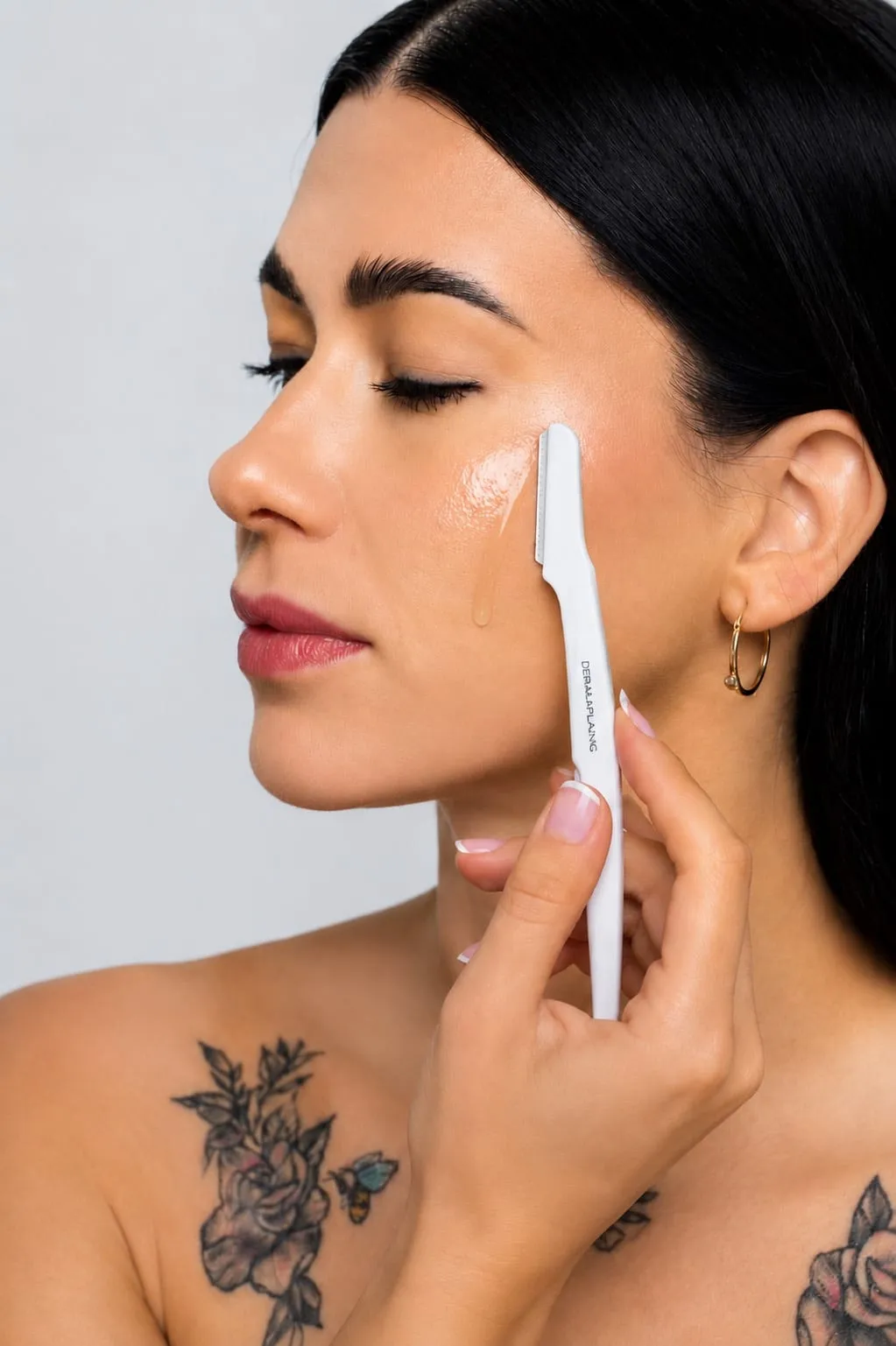
Dermaplaning uses a sterile blade to lift dead surface cells and fine vellus hair. The immediate result is that light reflects off the skin properly again and makeup sits flat instead of catching. The less obvious benefit is absorption — serums applied afterwards reach skin rather than sitting on a layer of dead cells.
- Duration
- 30–45 minutes
- Investment
- from $200
- — Makeup catching on fine facial hair
- — Dull, rough surface texture
- — Poor product absorption
- — Prepping the skin before an event
-
01
Cleanse
Skin is fully cleansed and dried — the blade needs a dry surface.
-
02
Dermaplane
Worked section by section at a fixed angle across the face.
-
03
Treat
A serum and mask go on while absorption is at its best.
-
04
Protect
SPF, always. Freshly exfoliated skin burns easily.
Dermaplaning, honestly
- Will my hair grow back thicker or darker?
- No. Vellus hair grows back exactly as it was — a blade cannot change the follicle. This is the single most common worry and it is a myth.
- Is dermaplaning safe for sensitive skin?
- Usually yes, and it is often gentler than a chemical exfoliant since there is nothing for the skin to react to. I avoid it over active acne or inflamed rosacea.
- How often can I have it done?
- Every four weeks or so, which matches your natural turnover cycle. More frequently than that and you are exfoliating live skin rather than dead cells.
Microneedling
Collagen induction therapy that softens texture, scarring and fine lines by prompting the skin to rebuild itself.
Biostimulators
Regenerative actives driven deep into the skin by microneedling or electroporation — no injections — to rebuild where it has thinned.
High-Tech Treatments
Radiofrequency, cryotherapy, microcurrent and EMS — the treatments where the right device does something hands cannot.